Ever wondered what happens if a pipeline company wants to run a line through your land? If you own property in Texas, understanding the basics of texas pipeline eminent domain can save you money, stress, and confusion. In this guide, you’ll learn how pipeline eminent domain works in Texas, what your rights are, and practical steps you can take during easement negotiations. Whether you’re a homeowner, rancher, or investor, this guide will help you handle the process with confidence.
What Is Texas Pipeline Eminent Domain?
Eminent domain is the legal power that allows the government, and sometimes private entities, to take private land for public use. In Texas, pipeline companies can sometimes use this power to acquire land for building pipelines, even if the owner doesn’t want to sell. The process is meant to ensure that important infrastructure projects, like oil, gas, and water pipelines, move forward when the public benefits.
Not every pipeline company can use eminent domain. In Texas, only those classified as “common carriers” have this authority. Common carriers are companies that transport products, like oil or gas, for the general public. To qualify, they must file certain paperwork with the Texas Railroad Commission. However, just because a company says it’s a common carrier doesn’t make it so. Texas courts have seen legal fights over this, like the well-known Denbury vs. Texas Rice Land Partners case, where landowners challenged whether a company actually met the requirements. This means landowners sometimes have room to question the company’s right to take their land.
The Pipeline Easement Process: What to Expect
If a pipeline company contacts you about building on your land, they’ll usually want an easement. An easement is a legal agreement that gives the company the right to use a specific strip of your property for their pipeline, while you retain ownership of the land. Here’s what typically happens:
- The company sends a letter or makes a call to express interest in your land.
- They may offer a proposed easement agreement and an initial payment amount.
- If you don’t agree, the company can start the eminent domain process, which includes formal offers and, if necessary, court proceedings.
Throughout this process, you have the right to negotiate the terms of the easement, including the payment amount and what activities are allowed on your land. Don’t feel pressured to sign the first agreement you see. Texas pipeline easement negotiation is a key moment to protect your property and your future.
Key Rights of Texas Landowners During Eminent Domain
Facing eminent domain can be stressful, but Texas law gives you several important rights. Understanding these can make a big difference in the outcome.
- The right to notice: The pipeline company must notify you in writing and make a bona fide offer before filing anything in court.
- The right to negotiate: You can negotiate for better compensation and improved easement terms. This includes payment, restoration of your land, and limits on company access.
- The right to challenge: If you believe the company isn’t a true common carrier, or if the taking isn’t for a public use, you can challenge the project in court. The Denbury Texas Rice Land Partners case set an important precedent here.
- The right to compensation: Texas law requires the company to pay you the fair market value for the land it takes, plus damages to the rest of your property if the easement lowers your property value.
These rights apply across Texas, whether you’re in Houston, Dallas, the Permian Basin, or along the Gulf Coast. Still, details can vary by city or county, so it’s smart to check local rules or talk with an expert if you’re unsure.
How to Negotiate a Texas Pipeline Easement
Negotiating a pipeline easement isn’t just about getting a higher payment. The agreement you sign can affect your property value, daily use, and even your peace of mind for years to come. Here are some practical tips for negotiating an easement that works for you:
- Review the easement terms carefully. Look for limits on pipeline size, number of lines, and future expansion rights. Does the company want access for more than just construction?
- Ask for restrictions on where and when the company can access your land. For rural landowners, this might include gates, fencing, or limits during livestock breeding season.
- Seek clear language on restoration. Make sure the company agrees to return your property to its original condition after work is done.
- Don’t forget about surface and subsurface use. Can the company install other equipment or conduct blasting? Spell out what’s allowed.
- Get a fair value. Consider getting an independent appraisal to help determine what your land is worth. Texas pipeline easement property value can rise or fall depending on location, crop impact, or development plans.
- Include a damages clause. If your land, crops, or irrigation systems are damaged, the company should pay for repairs.
- Ask for legal review. Easement agreements are binding. Even if you feel comfortable, it’s wise to have a professional check the details before you sign.
A texas pipeline easement negotiation checklist can help you keep track of your priorities and spot red flags in proposed agreements.
What Pipeline Companies Don’t Tell You
Pipeline companies have experience and resources on their side. While some are transparent, others may leave out details that matter to you as a landowner. Here are a few things to keep in mind:
- The “standard” offer is just a starting point. Companies often expect landowners to negotiate.
- You don’t have to accept the first payment amount. Offers can go up, especially if your land is in a valuable spot or if you’re organized.
- Easements can last forever. Make sure you understand how future use, transfer, or abandonment is handled. Some landowners discover that old easements limit what they can do with their land decades later.
- Multiple pipelines may be possible. Unless the agreement says otherwise, the company could add more lines in the future.
- You may be able to challenge common carrier status. If you believe the company isn’t truly serving the public, ask questions and consider your legal options.
The more you know about the process, the stronger your position becomes.
Regional Differences: Permian Basin, Gulf Coast, and Cities
Eminent domain in Texas by city, region, or property type can look a little different. In the Permian Basin, for example, pipeline projects often move quickly due to oil and gas demand. Large-tract owners have unique concerns about livestock crossings, irrigation, and access roads. Along the Texas Gulf Coast, environmental factors and flooding risks come into play. In metro areas, property values and zoning rules can change the negotiation.
No matter where your land is, the basic process is similar, but local differences can affect the outcome. Find out if neighbors have faced pipeline easements recently. Their experience can help you set realistic expectations or spot issues before they appear in your own negotiations.
Common Questions About Texas Pipeline Eminent Domain
If you’re dealing with a potential pipeline easement, you probably have a lot of questions. Here are a few of the most common:
What if I refuse to sign the pipeline easement?
The company may start the formal eminent domain process, which can end up in court. However, most cases settle before reaching that stage.
How is compensation calculated?
The main factor is fair market value, but damages to your remaining land and impact on business or crops can add to the total. Independent appraisals are often helpful.
Can I use my land once the pipeline is built?
Usually, yes, but the easement may limit certain activities, like building structures or planting trees directly above the pipeline.
How long does the process take?
It varies. Some negotiations are quick, while others take months or longer if the case goes to court.
Is legal help required?
It’s not required, but many landowners choose to consult with a professional. The process and paperwork can be complex, and experienced eyes can catch things you might miss.
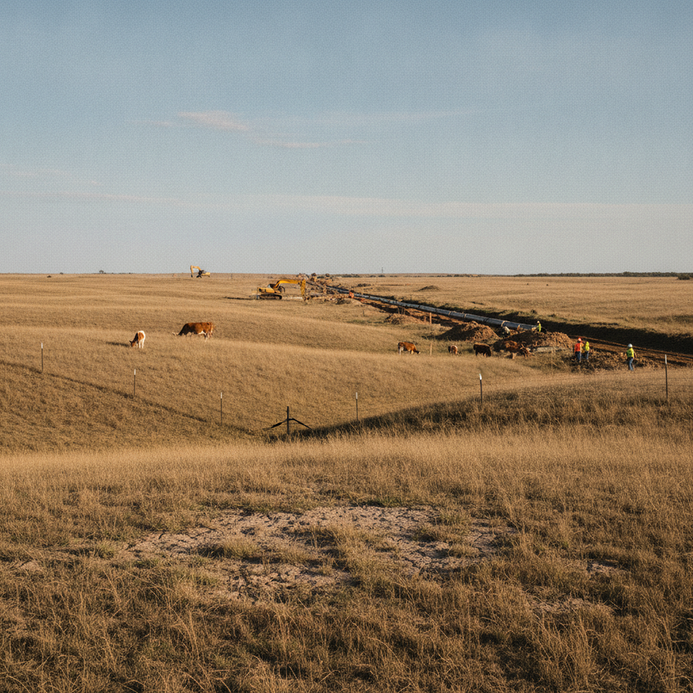
[IMAGE: A panoramic view of a Texas ranch with a pipeline construction crew working in the distance, showing the scale of a pipeline project on rural land. AI prompt: “Panoramic Texas ranch landscape, pipeline construction crew, distant machinery, wide open fields, blue sky, realistic, detailed.”]
Conclusion
Texas pipeline eminent domain is a complicated process, but understanding your rights and options makes all the difference. With the right approach, you can protect your property and negotiate a fair deal. Ready to learn more or need practical tips tailored to your situation? Contact us to learn more.