Have you been contacted about a pipeline crossing your land? If so, you’re not alone. Pipeline companies need agreements with landowners to install and maintain lines, and these deals can have a big impact on your property. In this guide, you’ll learn exactly how Texas pipeline easement agreements work, what rights you keep, what you might be giving up, and how to make sure your land is protected for the long haul.
What Is a Pipeline Easement Agreement?
A pipeline easement agreement is a legal contract between a landowner and a pipeline company. It gives the company permission to use a specific part of your land for a pipeline. You still own the land, but the company gets certain rights, usually to construct, operate, and maintain the pipeline. In Texas, these agreements are common because the state has thousands of miles of oil, gas, and water pipelines crisscrossing rural and urban areas.
The primary keyword, texas pipeline easement agreements, refers to these specific contracts that affect property owners across the state. Understanding what’s in these documents can help you avoid surprises down the road.
Why Are Pipeline Easements Needed in Texas?
Texas is a major energy producer, and pipelines are the safest and most efficient way to move oil, gas, and water over long distances. Companies can’t just build wherever they want, they need legal permission from each landowner along the route. That’s where pipeline easement agreements come in.
For property owners, this often starts with a letter or visit from a land agent or right-of-way company. Sometimes, the threat of eminent domain is mentioned, which means the company could try to take the easement through a legal process. But most easements are negotiated and signed voluntarily. If you’re approached, it means your property is important to the project, and you have decisions to make.
Key Terms and Rights in Texas Pipeline Easement Agreements
Every easement agreement is a little different, but there are some common terms you’ll see. Here’s what to watch for:
-
Easement Area: This describes exactly where on your land the pipeline will go. It should be clearly marked with measurements, sometimes with maps or plats attached.
-
Width of Easement: Many pipelines require a permanent easement (often 30-50 feet wide) and a temporary workspace (which can be much wider) during construction.
-
Type and Number of Pipelines: The agreement should specify whether it’s for a single pipeline or allows more to be added later. Some companies try to keep the language open-ended, so pay close attention.
-
Access Rights: Companies usually want the right to access the easement at any time for maintenance, inspection, or emergency repairs. Make sure the agreement spells out how and when they can enter your property.
-
Surface Use: Will the company be able to build above-ground structures, install roads, or clear trees? These details matter, especially for farmers and ranchers who rely on every acre.
-
Restoration and Damages: After construction, the company is usually required to restore the land as close as possible to its original state. Look for language about repairing fences, reseeding grass, or fixing driveways.
-
Compensation: Perhaps the most discussed part, this is the payment you’ll receive. It can be a lump sum or structured in another way. Don’t forget to consider lost value, inconvenience, and any long-term restrictions.
-
Duration and Termination: Most easements are permanent, but not all. Make sure you know if, and how, the agreement ends if the pipeline is ever removed or abandoned.
The Easement Negotiation Process Explained
Getting approached about an easement can feel intimidating. But you have more say than you might think, especially before you sign anything. Here’s what the usual process looks like in Texas:
-
Initial Contact: A land agent or pipeline representative reaches out, often with an offer in hand. They may say it’s a standard agreement, but every situation is unique.
-
Survey and Appraisal: The company may want to survey your land or conduct an appraisal to determine value. You have the right to be present and to receive copies of any reports.
-
Review the Agreement: Don’t rush. Review every clause, and consider how it could affect your current or future use of the property. Many owners seek advice from an attorney familiar with texas pipeline easement agreements.
-
Negotiate Terms: Almost every part of the agreement is negotiable. This includes the payment amount, route, timing, access points, and land restoration promises. You can ask for changes or additional protections.
-
Sign or Decline: Only sign when you’re satisfied with the terms. Remember, if you don’t agree, the company may try to use eminent domain to force an easement. However, negotiations often continue even during that process.
Ever wondered what happens if you just say no? In Texas, pipeline companies may be able to take you to court to get the easement through condemnation, but that doesn’t mean you lose all control. The terms and payment amount might still be up for debate.
Common Concerns for Landowners: What to Watch Out For
When reviewing pipeline easement agreements, several issues come up again and again for Texas landowners. Here are some of the most frequent worries, and what you can do about them:
-
Future Use Restrictions: Will the easement limit your ability to build, farm, or subdivide your land? Make sure the agreement is clear about what you can and can’t do in the easement area.
-
Multiple Pipelines: Some agreements let the company install more than one line or switch the type of products they transport. If you only expect one pipeline, push for language that says so.
-
Surface and Subsurface Rights: Pay close attention to what the company can do above and below ground. Can they build above-ground valves or access roads? Can they dig or use heavy equipment in the future?
-
Environmental Concerns: Pipeline construction can disrupt soil, water, and wildlife. Ask about plans for erosion control, spill prevention, and habitat restoration.
-
Livestock and Agriculture: For ranchers and farmers, pipelines can interfere with grazing, irrigation, and everyday chores. Insist on protections for water lines, gates, and livestock crossings.
-
Easement Abandonment: What happens if the pipeline is no longer used? Some agreements leave the pipe in the ground. Others require removal. Clarify this up front to avoid future headaches.
-
Ongoing Maintenance: Companies need access, but that shouldn’t mean unlimited entry or disruption. Set expectations for notice and repair of any damage after maintenance visits.
Practical Steps to Protect Your Interests
If you’re facing a request for a pipeline easement, here are some practical things you can do to protect yourself:
-
Get Everything in Writing: Don’t rely on verbal promises from land agents. Make sure all agreements are included in the final signed document.
-
Map It Out: Get a clear, legal description of the easement area. Ask for a survey or map showing exactly where the pipeline will go.
-
Negotiate for More: Payments are often negotiable. So are terms like fencing, gate access, and restoration work. You don’t have to accept the first offer.
-
Plan for the Long Term: Think about how the easement could affect your property for decades. Will it impact land value, resale, or future development?
-
Consult Experts: Consider talking to a real estate attorney or land consultant with experience in texas pipeline easement agreements. They can spot red flags and help you negotiate better terms.
-
Stay Informed: Read up on Texas laws about pipeline easements and eminent domain. Government sites like the Railroad Commission of Texas (RRC) and the Texas Commission on Environmental Quality (TCEQ) have useful resources.
[IMAGE]
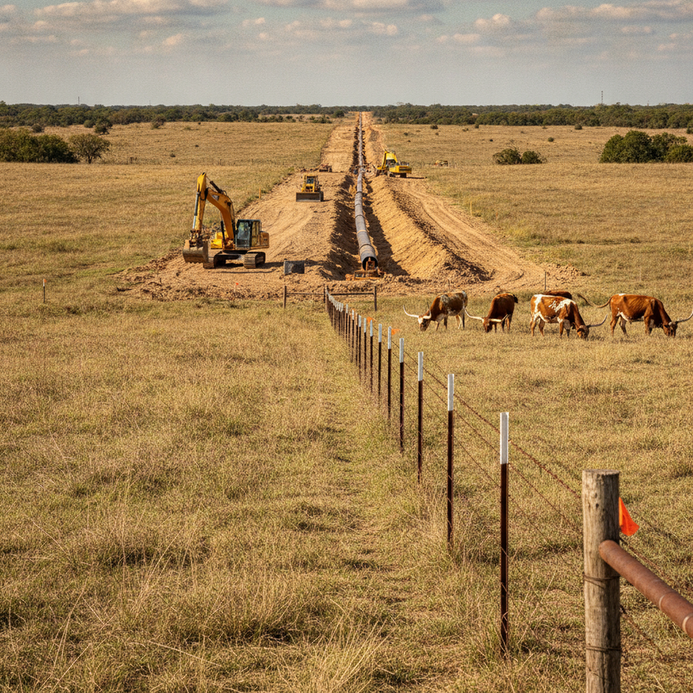
alt=”Texas rural land showing a newly constructed pipeline corridor with visible construction equipment and survey markers, barbed wire fencing, and a few grazing cattle nearby. Photorealistic, daylight, wide-angle.”
prompt=”A Texas rural landscape with a new pipeline corridor, construction machinery, survey markers, barbed wire fencing, and grazing cattle in the background. Photorealistic, wide-angle, daylight.”
Legal Rights and Resources for Texas Landowners
Texas law gives property owners certain protections when it comes to pipeline easements. Here are a few important rights to remember:
- You have the right to just compensation for any land taken for a pipeline easement.
- You have the right to notice and a chance to negotiate the terms before any condemnation case moves forward.
- You have the right to challenge the company’s offer or take the case to court if you feel the compensation or terms are unfair.
- You have the right to hire your own appraiser or legal help.
If you’re dealing with a pipeline company, it’s smart to use all the resources at your disposal. The Texas Landowner Bill of Rights, published by the Texas Attorney General, is a great starting point. You can also check with the Texas Real Estate Research Center or local universities for guides on property rights and land use.
Conclusion
Texas pipeline easement agreements might seem overwhelming, but understanding the basics puts you in the driver’s seat. By knowing your rights, asking questions, and getting good advice, you can protect your property and get fair value for any easement. Contact us to learn more.