Understanding Texas Gas Pipeline Projects in 2024
If you own property in Texas, you’ve likely heard about the wave of new gas pipeline projects planned for 2024. These projects are changing the landscape across the state, from rural ranches to suburban neighborhoods. Whether you’re a farmer, rancher, or residential homeowner, it’s important to understand how texas gas pipeline projects 2024 might affect your land, your rights, and your daily life. In this guide, you’ll learn about the key legal and practical issues, including how eminent domain works, what pipeline easements mean, and what you can do to protect your interests.
The Pipeline Boom: What’s Happening in Texas Now?
Texas is the heart of the nation’s energy industry. In 2024, new pipeline projects are connecting natural gas sources in the Permian Basin and Eagle Ford Shale to markets across the country. Companies are building these pipelines to meet growing demand and to move gas more efficiently.
What does this mean for landowners? You may receive letters or visits from pipeline companies asking for access to your land. Some projects are decades in the making, while others seem to pop up overnight. In many cases, these pipelines cross farmland, ranches, or even residential lots, leaving property owners scrambling to figure out what happens next.
The scale of these projects is huge. Pipelines can stretch for hundreds of miles, with construction zones that are sometimes wider than a two-lane highway. For many landowners, this is their first experience dealing with such a large infrastructure project. It’s natural to feel overwhelmed, but understanding the basics can help you make smart decisions.
Eminent Domain and Pipeline Law in Texas
Eminent domain is the legal power that allows government agencies, and sometimes private pipeline companies, to take private property for public use. In Texas, this power is often used for pipelines that are considered essential for energy transport. You might hear the term “condemnation” to describe the process that happens when a property owner and a pipeline company can’t agree on terms.
Under eminent domain pipeline law, a company must offer you “just compensation” if it takes part of your land for a pipeline. But what’s considered fair isn’t always clear. The company may start with a low offer, hoping you’ll accept quickly. Remember, you have the right to negotiate, ask questions, and seek outside advice before agreeing to anything.
Pipeline companies must follow certain steps before taking your land. They have to show their project is for public use and follow Texas laws about notice, negotiation, and, if needed, court proceedings. If you refuse their offer, the company can file a condemnation lawsuit, and a judge or special commission will decide how much you should be paid.
Understanding Pipeline Easements: What Are They?
A pipeline easement is a legal agreement that allows a company to use a strip of your land for a specific purpose, in this case, laying and maintaining a pipeline. You still own the land, but your rights are limited in the easement area. Easements can last forever, even if the pipeline is removed.
Ever wondered what’s in a typical pipeline easement? These agreements spell out things like:
- The exact location and width of the easement area
- What you (the landowner) can and can’t do on the easement strip
- What the company can build or repair
- How much you’ll be paid, and when
Some landowners are surprised to learn that the company can return years later to repair or replace the pipeline, even if you’ve built fences or planted trees on the easement. That’s why it’s critical to read (and negotiate) the terms carefully. Easement laws in Texas give you some rights, but companies often use standard agreements that favor their needs over yours.
Landowner Rights: What You Can, and Can’t, Do
It’s your land, but a pipeline easement changes what you can do with it. Here’s what you should know about your rights and limitations:
You can usually:
- Continue farming or grazing outside the pipeline strip
- Access the rest of your property
- Receive payment for damages or lost value
But you may not be able to:
- Build permanent structures (like barns or homes) on the easement
- Plant large trees that could interfere with the pipeline
- Dig or change the land’s surface without permission
Pipeline rights for landowners also include the right to negotiate. You can ask for changes to the agreement, higher compensation, or specific protections for things like livestock crossings, irrigation lines, or road access. If a company refuses to discuss changes, you don’t have to sign right away.
Compensation: What’s Fair for Your Land?
When a pipeline crosses your property, you should be paid for the value lost, not just the strip of land used. Texas law says you’re entitled to “just compensation,” but what does that mean in real life?
The company’s first offer is almost never their best. You can negotiate for more money or for payment for things like crop loss, business disruption, fencing, or even the impact on your property’s resale value. Some landowners get paid for temporary damages during construction and for permanent loss of use in the easement area.
A few tips for landowners:
- Don’t rush. Take time to review any offer or agreement.
- Ask for a copy of the proposed easement and all maps or plans.
- Consider getting your own property appraisal.
- Talk to neighbors who have dealt with similar projects.
Understanding pipeline easements and compensation can make a big difference in your long-term land value and peace of mind.
Navigating the Process: Steps for Texas Landowners
If you’ve been contacted about a pipeline, what should you do next? Here’s a step-by-step approach:
- Read all documents carefully before signing anything.
- Keep records of all communications with the pipeline company.
- Research your rights under Texas eminent domain and easement laws.
- Don’t be afraid to ask questions or request changes.
- Watch for deadlines, if you get a condemnation notice, you’ll have limited time to respond.
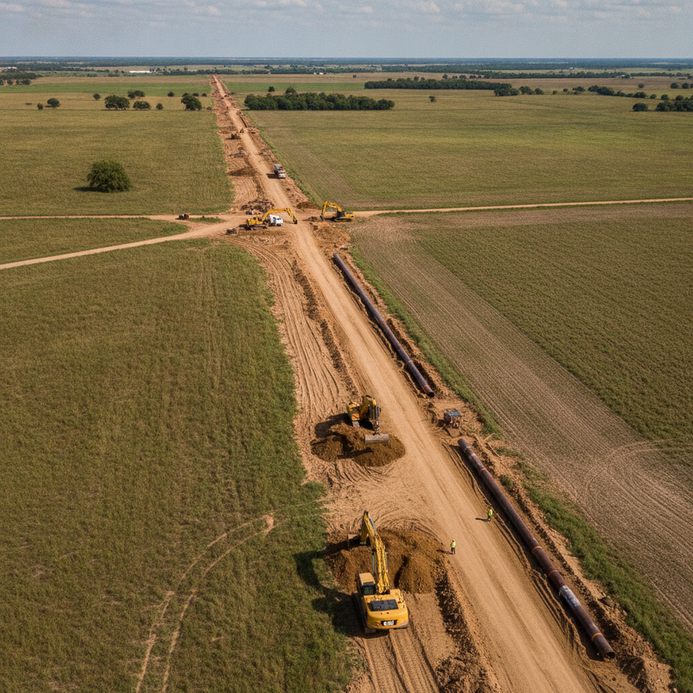
[Inline image placeholder: aerial view of a gas pipeline construction site crossing Texas farmland]
Image prompt: Aerial view of a large gas pipeline construction site in Texas, with fields, dirt roads, and construction machinery visible.
If negotiations break down, you may end up in court. But many disputes are settled before reaching that point. Staying informed and organized gives you the best shot at a fair outcome.
Common Concerns: Livestock, Water, and Property Use
Texas landowners often worry about more than just money. Pipelines can affect daily life in ways you might not expect. For example:
Livestock crossings: If you run cattle or other animals, a new pipeline can disrupt grazing patterns or block access to water. You can ask the company to build gates or crossings to keep your animals safe.
Water rights and irrigation: Pipeline construction can damage wells, ponds, or irrigation lines. Make sure your agreement covers repairs and compensation for any water-related losses.
Future property use: Easements last a long time. Think about how your family or future buyers might want to use the land. Will the pipeline get in the way of building, selling, or splitting up your property?
These are important details to negotiate up front, don’t assume the company will handle them automatically.
Staying Informed: Resources for Texas Landowners
When dealing with texas gas pipeline projects 2024, knowledge is your best defense. Reliable information helps you avoid costly mistakes and make better choices. Here’s where you can turn for help:
- Texas Railroad Commission: Regulates pipelines and can answer technical questions.
- Texas Department of Transportation: Offers guidelines on pipeline safety and land use.
- Texas Attorney General’s Office: Shares information about property rights and eminent domain.
- Local county extension offices or landowner groups: Connects you with neighbors who have faced similar situations.
You don’t have to figure it all out alone. Reaching out early can save headaches later.
Conclusion
Texas gas pipeline projects 2024 are bringing big changes to landowners across the state. Understanding your rights, the laws around eminent domain, and how pipeline easements work puts you in control. Don’t be rushed into a decision, take your time, ask questions, and protect your land for years to come. Contact us to learn more.