Ever wondered what happens if the government or a utility company wants to take part of your land for a public project? Whether you’re a homeowner, rancher, or investor, understanding how condemnation works in Texas is crucial. This guide will walk you through what condemnation means, why it happens, and what steps you can expect if your property is targeted. You’ll also learn about your rights, the process, and how to respond if you receive a condemnation notice.
What Is Condemnation?
Condemnation is the legal process where a government entity or, sometimes, a private company with special authority takes private property for public use. In Texas, this usually happens for projects like highways, pipelines, electric lines, schools, or water treatment plants. The power to take private land for the public good is called eminent domain.
It’s important to know that condemnation doesn’t always mean your whole property will be taken. Sometimes, only a piece is needed for a new road or a utility easement. The law requires the entity taking the land to pay you fair compensation, but “fair” can be a matter of debate.
One common example is when a city wants to widen a busy street. They may need a strip of land from several homes along the route, not the whole lot. A pipeline company might only need an easement under your pasture, allowing them to bury a pipe but letting you continue grazing cattle once the project is complete. In both cases, you still own your property, but your use of it may change.
Why Does Condemnation Happen in Texas?
You might be asking, “Why my land?” Texas is growing fast. New roads, pipelines, and power lines are needed to support the population and connect rural and urban areas. Cities, counties, school districts, and private companies (like pipeline operators) can all have condemnation authority in certain situations.
For example, if the Texas Department of Transportation decides to widen a state highway, they might need to acquire strips of private land along the planned route. Utility companies can also use condemnation to install new transmission lines or water pipes. The goal is always a project that benefits the public, even if it affects individual landowners along the way.
Sometimes, condemnation is used for less obvious reasons. School districts can acquire land for new school buildings if an area is growing. Water districts may use condemnation to build reservoirs or treatment plants that supply a whole region. Even a small rural property could be affected if it sits on a planned path for a major utility project.
Private companies do not get to use condemnation power for their bottom line. In Texas, they must show the project has a real public benefit, like delivering natural gas or water to thousands of homes. The law tries to balance the needs of the community with the rights of individual landowners.
The Condemnation Process: Step-by-Step
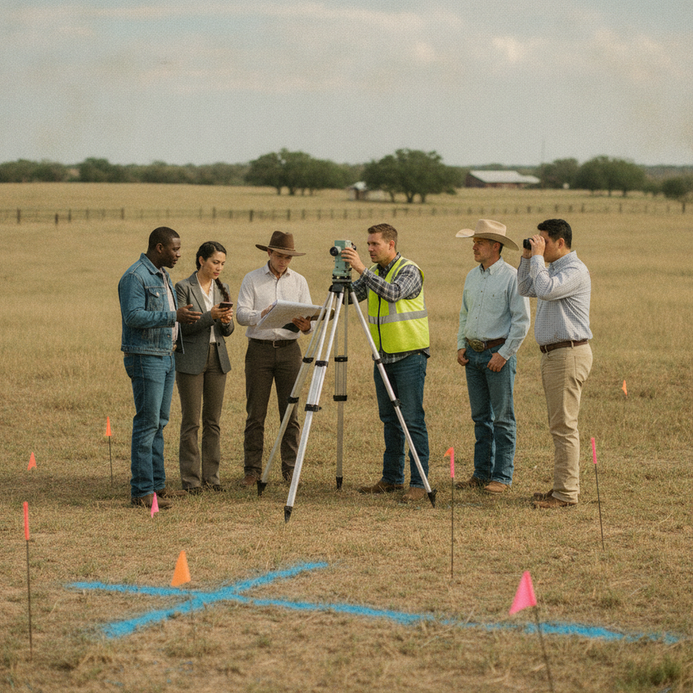
If you’re facing condemnation, it’s helpful to know what happens next. The process in Texas usually follows several steps:
-
Project Announcement: The government or company announces a public project. There may be public meetings to discuss the plan and show maps. If your property is in the path, you may get an early notice or see surveyors on your land.
-
Survey and Appraisal: Officials will likely need to enter your property to survey and determine exactly what part is needed. They hire an appraiser to estimate the value of the land to be taken and any damages to your remaining property. The survey may include staking out boundaries, taking photos, and mapping any structures, fences, or crops that might be affected. It’s common to see survey flags or painted markings on your land at this stage.
-
Initial Offer: You receive a written offer. This should include an appraisal report and a description of the land needed. Texas law requires the offer to be “good faith,” meaning it should be based on real market value. The offer package should also explain your rights and include a copy of the Texas Landowner Bill of Rights.
-
Negotiation: You can negotiate with the condemning authority. Some landowners accept the initial offer, but many ask for more, especially if they believe the offer is too low or if the project will impact their ability to use the rest of their land. You can point out unique features of your property, such as irrigation systems, mature trees, or business uses, that may increase its value. It’s also a chance to ask for special terms, like new fencing, driveway changes, or even temporary access during construction.
-
Formal Condemnation Suit: If no agreement is reached, the condemning authority files a lawsuit in the county court. This is not a criminal case; it’s about deciding fair compensation. You will be served notice, and you have the right to respond, usually with the help of a lawyer familiar with Texas condemnation law.
-
Special Commissioners’ Hearing: Three local landowners, called “special commissioners,” are appointed to hold a hearing. Both sides present evidence about value. The commissioners decide how much the landowner should be paid. This hearing is less formal than a trial, but both sides can bring witnesses, offer appraisals, and make arguments. The commissioners’ decision is based only on compensation, not whether the project is needed or not.
-
Appeal and Final Resolution: Either side can appeal the commissioners’ decision. At this point, the case could go to a trial with a judge or jury. Most cases settle before trial, but not all. Appeals can add months or even years to the process, so it’s important to keep records and stay informed at every step.
Throughout this process, you have rights. You can challenge the need for your land, question the amount offered, or bring in your own appraiser. Many landowners choose to hire an attorney with experience in eminent domain to help them navigate negotiations, hearings, and any court proceedings.
Key Rights and Protections for Texas Landowners
Texas law gives you several important rights if your property is targeted for condemnation:
- The right to fair compensation for the land taken and any loss in value to your remaining property.
- The right to receive a written offer and a copy of the appraisal.
- The right to negotiate and present your own evidence of value.
- The right to a hearing before special commissioners and, if needed, a trial by judge or jury.
- The right to challenge whether the taking is truly for a public use.
If you own farmland, ranchland, or rural acreage, you may have additional concerns, like keeping access to water or livestock crossings. Texas law sometimes requires special accommodations, especially for agricultural land. For example, if a pipeline is built across a ranch, the company may have to build gates or crossings so you can move equipment or cattle. Landowners can also request that construction avoids sensitive areas like water wells or family burial sites.
Another right is the ability to recover certain legal costs if the condemning authority does not follow the law or if the final award is much higher than the initial offer. For instance, if the government fails to provide a good faith offer before filing suit, you may be entitled to attorney fees or expert costs. Knowing these protections can encourage fairer negotiations and help you avoid being pressured into accepting less than your property is worth.
What Can Be Taken, and What Can’t
Condemnation in Texas can involve taking all or part of your property, or even just a specific “easement” (the right to use part of your land for a certain purpose). Here are some common scenarios:
- Full property: Rare, but possible for things like new schools or large-scale public works. For example, when a new high school or courthouse is built, several acres might be acquired from one or more owners.
- Partial property: More common, especially for road widening or utility projects. Only a strip or corner may be needed. If you own ten acres and the county needs a 20-foot strip along the road, that portion is taken while the rest remains yours.
- Easements: The most frequent type, especially for pipelines, power lines, or water lines. You keep ownership, but your use is limited. For example, you may not be able to build permanent structures or plant trees within the easement area, but you can continue to farm or graze animals after construction is finished.
Some things generally can’t be taken. For example, the government can’t take land just to increase tax revenue or give it to a private developer for profit. Texas law also strongly protects homesteads and agricultural land, though these can still be taken if a true public need is proven. If the stated purpose changes or the project is abandoned, you might have the right to reclaim your property under certain conditions.
It’s also important to know that certain religious institutions, cemeteries, and historical sites have extra protections under Texas law. These places may require special procedures or might be entirely excluded from condemnation projects.
How Compensation Is Calculated
When your property is condemned, you are entitled to “just compensation.” Figuring out what that means isn’t always simple. The main factors are:
- Market value: What a willing buyer would pay a willing seller for the property, considering its current use. Appraisers look at recent sales of similar properties, the location, improvements, and potential uses. For example, a corner lot on a major road may be worth more per acre than a remote pasture, even if the land size is the same.