Ever wondered if someone can actually gain ownership of your land just by using it, or what it really means when a neighbor has the right to cross your property? In Texas, the rules around property boundaries, use, and ownership are more than just lines on a map, they affect your rights, your peace of mind, and sometimes even your wallet. The main difference between adverse possession and easement rights can have a huge impact on what you can and can’t do with your land.
In this guide, you’ll get a clear view of what each term means, how they work in real-life situations, and what steps you can take to safeguard your property. Let’s dig into adverse possession vs easement rights in Texas and why every landowner should pay attention.
What Is Adverse Possession?
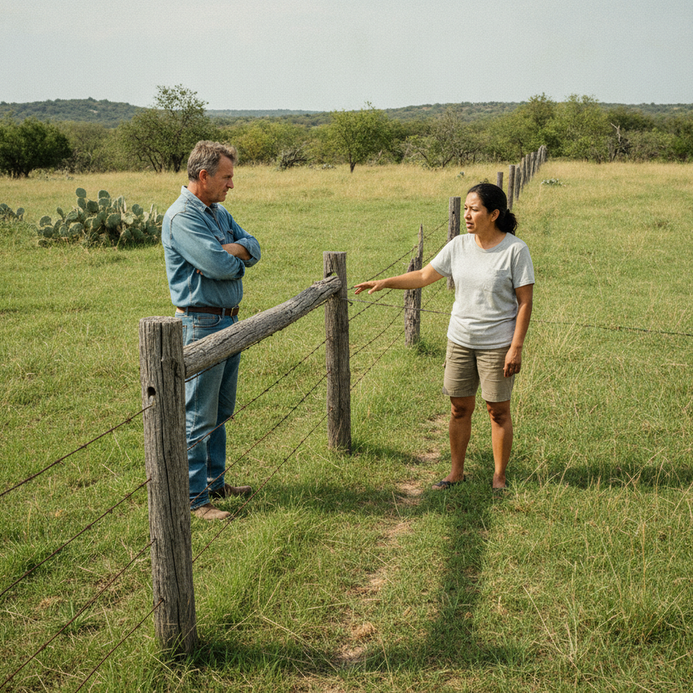
Adverse possession is a legal rule that can let someone who’s not the official owner take ownership of land simply by using it in a certain way for a specific period. In plain English, it means that if someone acts like they own a piece of land, using it openly, without your permission, and for a long enough time, they might actually become the legal owner. In Texas, this is sometimes called “squatter’s rights,” but it’s not as simple as just camping out on someone else’s property.
To successfully claim land through adverse possession in Texas, a person must meet several strict requirements:
- Actual Possession: The person must physically use the land. This could mean building a fence, planting crops, living there, or maintaining the area as if it’s theirs.
- Open and Notorious: Their use of the land must be obvious, not hidden or secret. Anyone, including the true owner, should be able to see what’s happening.
- Hostile to the Owner’s Interest: This doesn’t mean being angry. It simply means the use is without the true owner’s permission.
- Continuous Use: The use must be consistent for a certain number of years, without long breaks. In Texas, the period is often 10 years, but it can be as short as 3 or as long as 25, depending on the details.
- Exclusive Use: The person must act as if they are the only owner, not sharing with the public or the true owner.
Here’s a concrete example: Imagine you own a piece of land, and a neighbor puts up a fence that’s actually a few feet onto your property. If you don’t notice or do anything about it, and they treat that fenced area as their own for a decade or more, they may be able to claim it through adverse possession. The law is designed to settle long-standing disputes and encourage landowners to pay attention to their boundaries.
It’s important to know that adverse possession claims rarely succeed without clear, ongoing use and some sort of physical improvement or occupation, just walking across land or using it occasionally almost never qualifies.
What Are Easement Rights?
Easement rights are about use, not ownership. An easement is a legal right for someone to use a portion of another person’s land for a specific reason, without owning it. You might see this with a neighbor who needs to cross your property to reach the road, or with a utility company that needs to run water pipes or power lines through your backyard.
Easements in Texas come in several varieties:
- Express Easement: This is the most straightforward kind. It’s a written agreement, usually mentioned in the deed, that spells out exactly who can use the land and for what reason. For example, if your neighbor’s only driveway runs across the edge of your property, you might sign an agreement allowing permanent access.
- Implied Easement: Sometimes, easement rights exist even without something written down. If land is divided and one part can’t be reached except by crossing another, the law may “imply” an easement so the landlocked owner isn’t trapped.
- Prescriptive Easement: This one is easy to confuse with adverse possession. A prescriptive easement can be created if someone uses your land openly, continuously, and without permission for a set period, usually 10 years in Texas. The difference? They only get the right to use, not to own, that piece of land.
Let’s look at an example. Say you buy a home, and it turns out the local water company has pipes running under your backyard. That’s likely an express easement. Or, maybe your neighbor has always walked across a corner of your lot to get to their mailbox, and you never said anything. If this goes on for years, they could argue for a prescriptive easement, giving them the legal right to keep crossing, but not to own that part of your land.
Easements are very common in Texas, especially in rural areas where land is divided and access roads, pipelines, or even cattle trails need to cross more than one property.
Adverse Possession Vs Easement Rights: Key Differences
The line between adverse possession and easement rights is crucial for property owners. Here’s how they differ, with real-world examples to make it clear:
-
Ownership vs. Use: Adverse possession can lead to a total change in who owns the land. If successful, the person using the property becomes its legal owner. Easement rights, on the other hand, only give someone the right to use a certain part of the property for a limited purpose. The original owner keeps the land, but loses some control over its use.
-
Legal Requirements: Both adverse possession and prescriptive easements require long-term, open, and obvious use. However, adverse possession is stricter. The person has to use the land as if they own it, exclude others (including the real owner), and do so without permission. For a prescriptive easement, the use can be shared or limited to a specific activity, like walking or driving across the land.
-
Permission: Easements are often created with the property owner’s consent, either by signing a document or by long-accepted custom. Adverse possession only happens without permission, and any sign that the owner allowed the use can destroy an adverse possession claim.
Picture this: If your neighbor has always driven across your property to reach their barn, and you gave them written permission, that’s an express easement. If you never allowed it but never stopped them, and they kept doing it for a decade, it might become a prescriptive easement. If they put up a gate and treated the area as their own, it could even cross into adverse possession territory, but only if they meet all the legal rules.
Understanding the difference can help you spot problems early and avoid accidentally giving up more of your property than you intended.
How Texas Law Handles These Rights
Texas law spells out exactly what’s needed for adverse possession or easement rights to take hold. If you’re a property owner, it’s worth knowing the details so you can protect your land.
Timeframes Matter
The amount of time someone has to use the land before claiming rights depends on the situation:
-
Adverse Possession:
-
3 years if the claimant has a “color of title” (a legal-looking, but possibly invalid, deed or document),
-
5 years if the person pays property taxes and has a deed to the land (even if the deed isn’t valid),
-
10 years if the use is just open and continuous, with no deed or tax payments,
-
Up to 25 years in rare, unusual situations (such as abandoned property).
-
Prescriptive Easement:
-
Usually 10 years of open, continuous, and unauthorized use for the specific purpose (like crossing the land).
The rules are technical, sometimes the clock restarts if the owner objects or gives permission, and sometimes the requirements change based on what kind of property is involved. That’s why documentation and quick action are so important.
Recording and Documentation
Most easements, especially express ones, are recorded in property records. Before you buy a property, it’s wise to check the county records or the deed itself for any easements. These will spell out exactly what rights others might have to your land. This step can save you a huge headache later, especially if you plan to build, fence, or sell.
Adverse possession, by contrast, is rarely documented until after a dispute has gone to court. The process ends with a judge’s decision or a formal settlement, at which point the new ownership is recorded. Until then, you might not even know someone is building a claim against your land.
Some owners are surprised to learn about an easement or an adverse possession claim only when they try to sell, refinance, or develop the property. Keeping up with property boundaries and reviewing your land records regularly can help you spot problems before they grow.
Common Scenarios for Texas Landowners
Adverse possession and easement rights show up in all kinds of situations, from wide-open ranches to city neighborhoods. Here are some common examples:
Rural Landowners
In rural Texas, it’s not unusual for neighbors to use each other’s land for things like access roads, livestock crossings, irrigation ditches, or hunting paths. Sometimes, these uses have gone on for generations without a formal agreement. If a neighbor’s cattle cross your property every spring, or a dirt road cuts through your pasture, you should check whether there’s a written easement or if you could be at risk of losing control over that area to adverse possession or a prescriptive easement.
For example, if a rancher has used a shortcut across your field for decades and you never objected, they might claim a prescriptive easement. If they built structures, fenced off part of your land, and excluded you, it could lead to an adverse possession claim.