When a pipeline company shows up at your door, it’s natural to have questions and worries. Landowner rights during pipeline construction can feel complicated, but knowing where you stand makes a big difference. In this guide, you’ll learn about your legal rights, what to expect, and how to protect your land if a pipeline project is headed your way.
Understanding Eminent Domain and Pipeline Easements
Eminent domain is the government’s power to take private land for public use. In Texas, it isn’t just the government that can use this power. Private pipeline companies, if they meet certain requirements, can also use eminent domain to build projects that benefit the public, like pipelines for oil, gas, or water. It might sound surprising, but it’s been standard practice for decades in Texas energy law.
Before any construction begins, the pipeline company has to secure an easement from you. An easement is a legal right that lets someone use part of your land for a specific purpose, here, that’s for burying and maintaining a pipeline. Even after the easement is granted, you still own your property. Think of it like allowing a neighbor to use your driveway to reach their house, but you keep ownership of the driveway itself.
Most landowners first hear about a pipeline by receiving a letter or phone call from the company. This contact should explain the project and invite you to talk about terms. You never have to accept the first offer. You can negotiate the payment, the route, how wide the easement will be, and what limits will be placed on construction. For example, if you have a favorite stand of trees or a family cemetery, you can ask for the pipeline to avoid these areas.
If you and the company can’t agree, the company may file for condemnation. This is a legal process where a court decides if the project can move forward and how much you must be paid. It’s your right to be heard in court and to present evidence about what your land is worth.
Your Rights Before Construction Starts
The time before any digging is your best opportunity to shape what happens on your land. Texas law gives you several basic rights at this stage, and it’s important to use them.
First, the pipeline company must provide written notice and give you a copy of the Texas Landowner Bill of Rights. This is a plain-language document required by state law that explains your choices if a company wants an easement on your property. Read it carefully, it lays out your rights to negotiation, compensation, and legal representation.
You can (and should) ask for detailed maps showing exactly where the pipeline will go. Request copies of any surveys and plans. If you’re concerned about how construction might impact your home, barns, water wells, livestock areas, or crops, voice those worries now. Many landowners successfully negotiate special protections, like requiring the company to build fences around work areas, use locked gates, or limit the hours when crews enter the property. Some also ask for written promises about how the land will be restored when the work is done, or restrictions on the use of herbicides.
It’s smart to get your own independent appraisal. An appraiser who understands local land values can give you confidence that the company’s offer is fair, or point out where it falls short. Don’t be afraid to ask for time to review offers, get advice, and compare what’s being offered to what your neighbors have received for similar projects.
If the pipeline company wants to enter your land for surveys before any agreement is signed, they must give you advance notice. They can usually walk the property or take soil samples, but they can’t dig trenches or disturb the ground without your permission. If you’re unsure, look up Texas Property Code Section 21.021 or ask a local attorney for advice. You’re not required to allow destructive work during the survey phase.
What Happens During Pipeline Construction
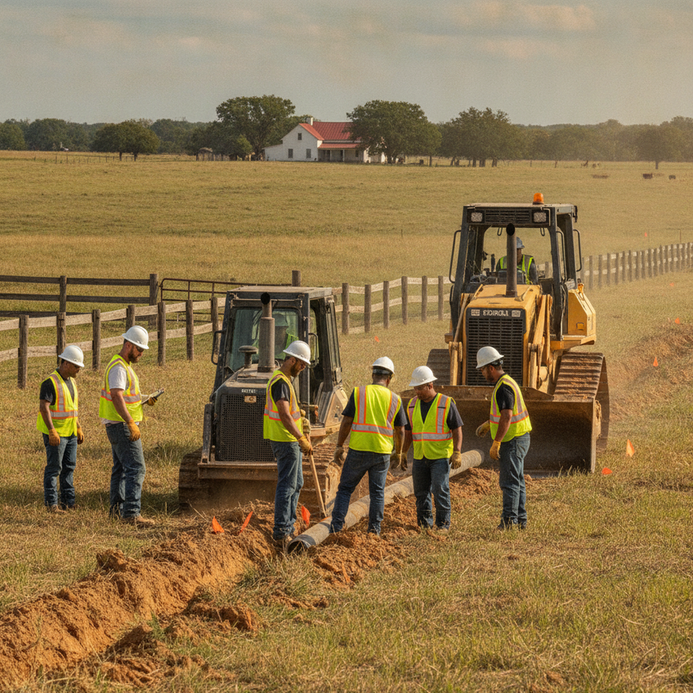
Once you sign an easement, construction can move quickly. Expect to see heavy machinery, like trenchers, bulldozers, and welding trucks, moving onto your property. Workers will stake out the pipeline’s path, dig trenches, lay pipe, weld sections together, and then backfill the trench. It can be a messy, noisy process that sometimes lasts weeks or months, depending on the project size.
It’s crucial to know that the company must follow the exact terms of your easement agreement. That means they can only use the land described in writing, no cutting through your pastures or yards just for convenience. If your property includes a working ranch or farm, you’ll want to pay close attention to how construction affects your operations. Many landowners require the company to install temporary gates or crossings for livestock and farm vehicles. For example, a cattle rancher might need extra fencing to keep animals safe, while a hay grower could ask the company to wait until after the cutting season to avoid ruining a year’s crop.
Noise, dust, and safety are real concerns. Ask the company what steps they’ll take to control dust, especially near homes or gardens. Will workers water down roads? What hours will work happen? If you have children or pets, can you fence off the construction zone? These questions might seem small, but they add up to a safer, less stressful experience.
Protecting your soil is another key issue. In Texas, where farming and ranching are a way of life, many landowners require that topsoil (the rich upper layer of soil) be set aside during trenching and replaced after the pipe is buried. This helps pastures and fields recover. If you irrigate, ask how they’ll avoid damaging lines or drainage systems. Make sure the agreement spells out how your land will be restored, not just a vague promise to “leave it as they found it.”
If you notice damage to wells, septic systems, ponds, or irrigation equipment, contact the company right away. Keep detailed records, take photos before, during, and after construction. For example, if your driveway is rutted by heavy trucks or your gate is left open and livestock escape, write down what happened, when, and who you spoke with. This documentation helps protect your right to fair compensation.
Compensation and Damages: What Are You Owed?
You’re entitled to fair compensation for the use of your land, and many factors go into calculating what’s fair. Payment isn’t just for the strip of land where the pipeline sits. You can also be paid for how the project affects the rest of your property. For example, if the pipeline runs near your home and makes it harder to enjoy your backyard, or if it cuts off access to a favorite fishing pond, those impacts matter.
Several things affect how much you might receive:
- The size and location of the easement. A pipeline running close to a home, well, or barn usually means higher compensation than one along a remote fence line.
- The type and number of pipelines. Some easements allow for multiple lines or future expansion, make sure you know what’s allowed and that you’re paid for it.
- Impact on your ability to farm, ranch, build, or use the land as you want. If you can’t plant trees, dig ponds, or build over the easement, that restricts your land’s value.
- Temporary damages during construction. Think about lost crops, compacted soil, broken fences, or time spent dealing with disruptions.
- Long-term restrictions. Sometimes, you can’t drive heavy equipment over the pipeline or build anything permanent. These restrictions can lower your property’s value.
Negotiating compensation isn’t always straightforward. You’re allowed to hire your own appraiser or work with other experts, like real estate agents or attorneys, who know local land prices and pipeline impacts. Many landowners join together in groups to negotiate as a block, which can lead to better terms. Don’t be afraid to ask neighbors what they’ve received for similar easements.
Texas law is clear: the pipeline company must pay for any damages caused during construction. If your fence is knocked down, your garden is torn up, or your cows get loose because a gate was left open, the company is required to repair or pay for the harm. Keep receipts, photos, and written notes. If you have to fix something yourself, track your time and costs so you can be reimbursed.
After Construction: Restoration and Long-Term Rights
When the pipeline is buried and construction ends, the company’s job isn’t finished. Texas law and most easement agreements require the company to restore your land to its previous condition, or as close as possible. This restoration can include replacing topsoil, reseeding grass, repairing ruts left by heavy equipment, and fixing broken fences or gates. For example, if you had a wildflower meadow that got torn up, you may be able to require reseeding with the same mix of native plants.
It’s a good idea to request a walk-through inspection after construction. This lets you spot any remaining problems before signing off on the project. If you see standing water, compacted soil, or gaps in fencing, point these out and make sure they’re addressed in writing. Restoration isn’t just about looks, it affects how you use your land and how much it’s worth in the future.
The easement itself becomes a permanent part of your property deed. This means that, even after the pipeline is buried, there will be long-term restrictions on what you can do above or near the line. Most easements say you can’t build structures, plant trees, or dig deep holes over the pipeline. Some allow the company to come back for maintenance or to add more lines in the future. If you’re thinking about selling your land, be prepared to provide buyers with a copy of the easement and to explain what it means for future use.